
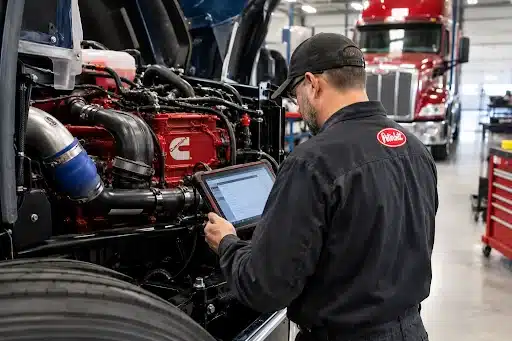
For commercial fleets operating through Southern Alberta, September and October are a good time to look beyond routine maintenance and make sure any engine-related issues are identified before winter arrives.
Cold weather can put additional demands on a truck that may already have an unresolved fault, intermittent warning, or developing engine problem. A condition that is manageable in the shop can become a much more serious operating issue when temperatures drop and the truck is working long hours on regional or long-haul routes.
That is where PACCAR and Cummins engine diagnostics can play an important role in preparing a fleet for winter. A proactive diagnostic visit gives technicians an opportunity to investigate fault codes, warning indicators, and other signs of an engine issue before they develop into an unexpected repair or roadside failure.
Why engine diagnostics matter before winter
Engine problems do not always begin with an obvious breakdown. A truck may continue operating while a warning light, intermittent fault code, performance change, or other symptom points to an issue that needs attention. For a fleet manager, the challenge is determining whether that issue can safely wait or whether it should be investigated before the truck enters another demanding operating season.
This is where diesel engine diagnostics can provide useful information.
Diagnostic equipment can help technicians identify recorded faults and investigate systems associated with the engine and vehicle. The results give the service team a better starting point for determining what needs further inspection or repair. For fleets, the benefit is not simply identifying a fault. It is having more information available before a truck is away from the shop and under pressure to complete a route.
How Preventative Maintenance Reduces Fleet Downtime and Operating Costs →
PACCAR and Cummins engines: what should fleets watch for?
Peterbilt trucks operating in Southern Alberta may be equipped with different engine configurations, so diagnostic procedures and recommended service can depend on the specific truck and engine. For operators running PACCAR or Cummins engines, however, the basic principle is the same: investigate warning signs rather than allowing an unresolved issue to become an operating surprise.
Depending on the truck and the symptoms being reported, a diagnostic visit may involve reviewing fault information, connecting appropriate diagnostic equipment, checking related systems, and determining whether additional inspection or repair is warranted.
Some problems may be relatively straightforward to address. Others may require further heavy-duty engine repair or additional troubleshooting. The important point is that diagnostics are part of the process of understanding what is happening with the truck. They are not a substitute for a proper inspection or repair when one is required.
What happens during a diagnostic visit?
A diagnostic appointment at Peterbilt of Southern Alberta is intended to give technicians the information they need to investigate an engine-related concern. The exact process will depend on the truck, engine, fault, and symptoms involved. In general, the diagnostic process may include:
- Reviewing the driver’s or fleet manager’s description of the problem.
- Checking applicable fault codes and warning information.
- Connecting appropriate diagnostic equipment.
- Investigating the systems associated with the reported fault.
- Determining whether additional inspection or testing is required.
- Identifying recommended repairs or service based on the findings.
A fault code by itself does not necessarily tell the entire story. Proper truck engine diagnostics help technicians investigate the underlying issue rather than simply reacting to a warning light.
What Is Included in a Commercial Fleet Maintenance Program? →
Why September and October are better than January
For a fleet manager, timing is an important part of preventative truck maintenance. Waiting until a truck has a serious problem can leave fewer options. If a diagnostic concern is identified during a planned shop visit in the fall, there may be an opportunity to investigate it and address the issue before winter operating conditions arrive. Discovering the same problem during a January route can mean unexpected downtime, schedule disruption, and an unplanned repair situation.
There is value in understanding what the truck is telling you while there is still time to make an informed service decision. For Southern Alberta operators, that is particularly relevant as winter weather becomes part of normal fleet planning.
Diagnostics are one part of a larger maintenance strategy
Engine diagnostics should not be viewed in isolation. A fleet maintenance strategy can include regular inspections, scheduled maintenance, repair planning, and attention to developing problems. Diagnostic work can complement those activities by helping identify issues that may not be obvious during routine checks.
For businesses operating multiple trucks, keeping track of recurring faults and maintenance needs can also help fleet managers plan shop visits and reduce avoidable interruptions.
The goal is straightforward: identify problems early enough that they can be properly assessed and dealt with as part of planned maintenance whenever possible.
Preparing your fleet for Southern Alberta winter
Before winter operating conditions arrive, fleet managers and owner-operators should consider whether any trucks have unresolved warning lights, recurring fault codes, unusual engine behaviour, or diagnostic concerns that have been put off during the busy operating season.
If there is an issue, documenting the symptoms and bringing that information to the service team can help technicians understand what the truck has been experiencing.
For operators who need Cummins engine service in Alberta or PACCAR engine diagnostics, Peterbilt of Southern Alberta can help assess engine-related concerns and determine what service or further diagnosis may be appropriate.
Don’t wait for a winter breakdown to investigate an engine fault
Winter preparation is about more than getting a truck through its first cold morning. For commercial fleets, it is about reducing the number of avoidable surprises during a season when operating conditions can already be challenging.
If a PACCAR or Cummins-powered truck has an unresolved diagnostic issue, fall is a practical time to have it investigated. Contact Peterbilt of Southern Alberta to book a diagnostic visit before winter operating conditions arrive.